











Welding Products
Nippon Steel Speciality Steel
Corrosion Resistant Steel
Steel for Bridge High Performance Structures (SBHS)
Nippon Steel Corporation is the third largest steel producer in the world. They invest heavily in R & D and have developed a number of speciality steels for specific needs. As Japan is very similar geographically and seismically to New Zealand, Nippon Steel speciality steels often have direct applicability here.
Corrosion Resistant Steel – CORSPACE®
Nippon Steel Corporation won the Excellence Award at the Japan Manufacturing Grand Prize in 2023 for the development of CORSPACE®, a specialised, high-performance steel to significantly delay rust and extend the lifespan of paint coatings on large steel structures.
CORSPACE® is designed for use in harsh coastal or high-chloride environments where weathering steels cannot be used, and standard painted steel is at higher risk of corrosion. Unlike conventional steel, which rusts rapidly under scratched paint in harsh environments, CORSPACE® contains a specialised alloy formulation such that when the paint is damaged, this chemistry blocks iron ions from dissolving, stopping sub-film rust from spreading.
Benefits of Use
- Extended Painting Cycles: CORSPACE® can be used with any standard heavy-duty bridge paint system which meets AS/NZS Standards. Rigorous lab testing has shown it can double the lifespan of the paint coating compared to conventional painted steel under identical environmental conditions. The repainting frequency of a standard bridge girder can be reduced to as low as once every 100 years.
- Reduced Life Cycle Costs: The extended life of the paint coating can slash long-term maintenance budgets in half.
- Defect Protection: CORSPACE® actively suppresses corrosion at critical pain points, including paint pinholes, scratches, sharp edges, and poorly cleaned joints.
- Severe Salt-Damage Resistance: CORSPACE® performs exceptionally well in harsh maritime zones (such as New Zealand and Japan’s coastal traffic corridors).
- Lower Carbon and VOC Footprint: Fewer repainting cycles mean significantly reduced Volatile Organic Compound (VOC) emissions and lower structural life-cycle environmental impacts.
- Standard Fabrication: It matches the exact mechanical, welding, cutting, and bending properties of ordinary structural steel, fully conforming to AS/NZS Standards without requiring special structural redesigns.
CORSPACE® has been used in the construction of over 80 bridges in Japan since 2012; in coastal environments, in cold regions where de-icing agents are used, and road and railway overpasses where life cycle maintenance work is difficult. It is increasingly being used in the construction of port facilities and equipment such as quay cranes and unloaders.
By minimising maintenance, extending the lifespan, and reducing the environmental burden through extended painting cycles for steel structures such as bridges and port facilities, CORSPACE® is making a significant contribution to sustainable steel construction.
Examples of use:
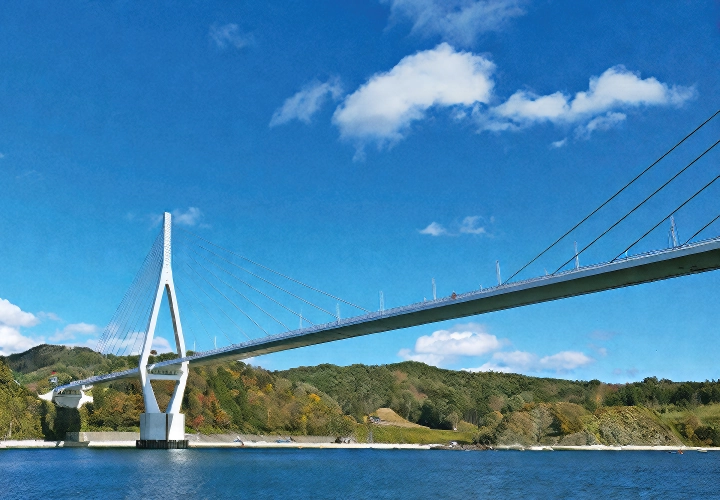
Kesennuma Bay Crossing Bridge
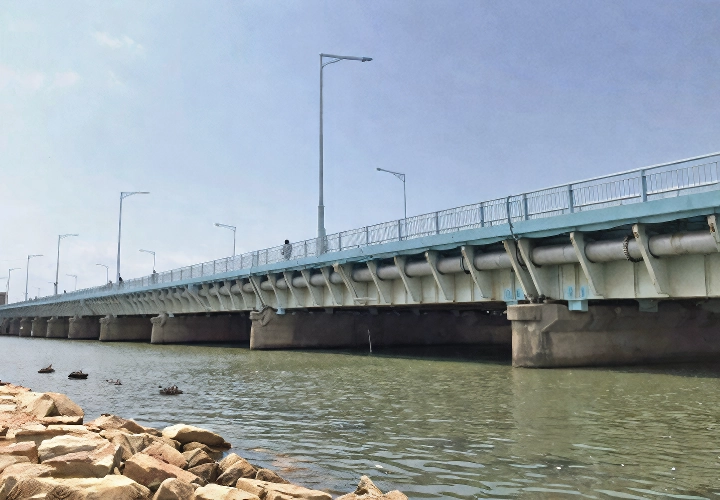
Yodogawa Bridge
Steel for Bridge High Performance Structures (SBHS)
SBHS (Steel for Bridge High Performance Structures) are high-performance, high-tensile strength steels developed to reduce the construction costs of steel bridges.
High strength, up to 700 N/mm 2, and uniformity of yield strength regardless of thickness allow for reduced steel in weight and wider spans. In addition, the SBHS steels are easier to work with; reduced or nil preheating is required, welding heat input can be higher, and cold bending work is improved.
SBHS steels are available in conventional weathering steel specifications and as CORSPACE, corrosion resistant steel specifications.
Reducing the weights of steel bridge structures through the use of SBHS with superior yield strength is considered an effective means not only of improving the earthquake resistance of bridges but also of helping to build a sustainable infrastructure.
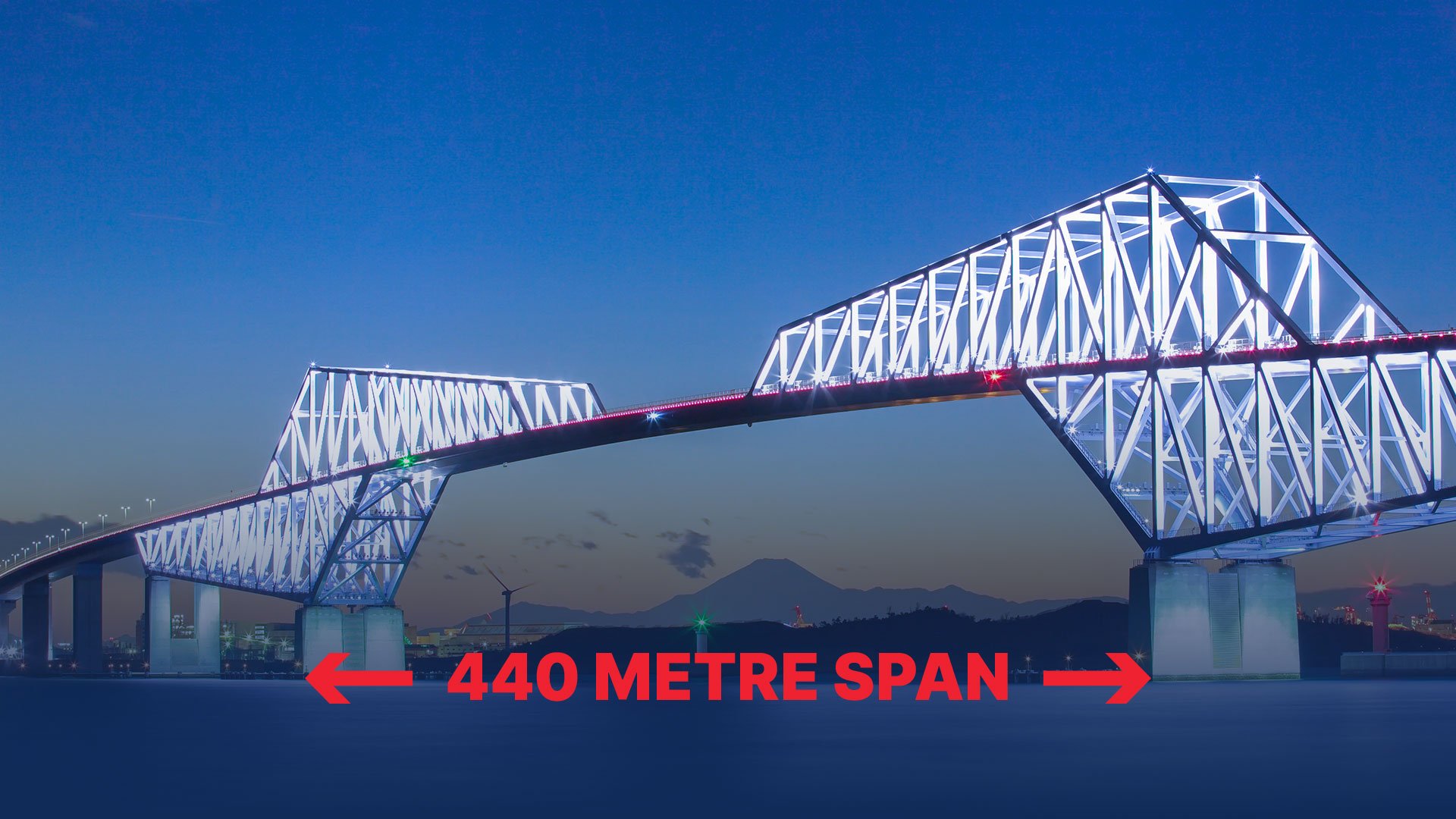
10,000 MT of Nippon Steel’s SBHS was used to build the Tokyo Gate Bridge pictured above, completed in 2011, including a 440 metre central span. The use of SBHS reduced total weight by 3% and total construction cost by 12% (estimates by the Japanese Ministry of Land, Infrastructure, Transport and Tourism).